

🎯 Quick Overview
Trailer
- Director: Robert Kenner
- Genre: Documentary, News
- Release year: 2008
- Runtime (length): 1h 34min
- IMDb rating: 7.2/10 (113K votes)
- Rotten Tomatoes: 95%
😅 Plot Summary – Badly Explained
A bunch of talking heads complain about how chicken nuggets are made, then tell you to buy organic so you can feel superior.
🍿 Food, Inc.: Detailed Plot Synopsis
The Rise of Fast Food and Industrial Agriculture
The documentary traces the evolution of food production in the United States, highlighting the shift towards mass production driven by the fast-food industry since the 1950s. It reveals how a handful of multinational corporations now dominate the food supply, prioritizing efficiency and profit over health and safety. These corporations wield significant control over farmers, workers, and consumers, often at the expense of ethical practices.
Corn: The Foundation of the Food System

Food, Inc. exposes the pervasive role of corn in the American diet. Government subsidies make corn incredibly cheap, leading to its widespread use in animal feed, processed foods, and even unexpected products like sweeteners and batteries. This reliance on corn contributes to health problems like obesity and diabetes, while also creating environmental issues related to intensive farming practices.

The Dark Side of Meat Production
The film unveils the often-horrific conditions in which animals are raised for meat production. Chickens, cows, and pigs are crammed into confined spaces, fed unnatural diets, and subjected to inhumane treatment. The overuse of antibiotics to prevent disease in these conditions contributes to the rise of antibiotic-resistant bacteria, posing a threat to human health. The documentary also touches on the exploitation of immigrant workers in slaughterhouses, who face dangerous conditions and low wages.
Monsanto’s Monopoly and the Fight for Food Safety

Food, Inc. scrutinizes the practices of Monsanto, a powerful corporation that has gained control over the seed market through patents on genetically modified crops. Farmers who save seeds from their harvests risk being sued by Monsanto for patent infringement. The film also highlights the story of Barbara Kowalcyk, a food safety advocate whose son died from E. coli contamination, and her fight for stronger food safety regulations.

⚠️ Spoilers and Ending Explained
🎬 Cast & Characters
- Michael Pollan (Michael Pollan): As the author of ‘The Omnivore’s Dilemma’, Michael Pollan analyzes the industrial food system and its impact on human health and the environment.
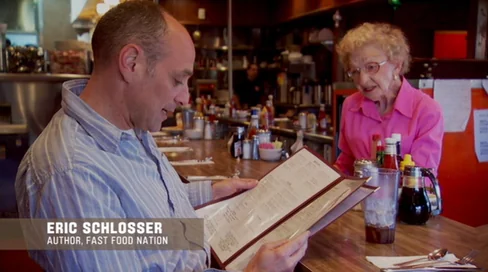
- Eric Schlosser (Eric Schlosser): The author of ‘Fast Food Nation’, Eric Schlosser exposes the practices of the fast food industry and its influence on American food production.
- Carole Morison (Carole Morison): A former Perdue chicken grower, Carole Morison reveals the harsh realities of contract farming and the pressure to conform to industrialized practices.
- Barbara Kowalcyk (Barbara Kowalcyk): A food safety advocate, Barbara Kowalcyk fights for stricter regulations after losing her son to E. coli poisoning from contaminated meat.
- Joel Salatin (Joel Salatin): As the owner of Polyface Farms, Joel Salatin champions sustainable farming methods and provides an alternative to industrial agriculture.
💬 Memorable Quotes
- Michael Pollan: “There are no seasons in the American supermarket.” – Pollan highlights the disconnect between natural food cycles and the year-round availability of produce made possible by industrial agriculture.
- Eric Schlosser: “The industry doesn’t want you to know the truth about what you’re eating, because if you knew, you might not want to eat it.” – This quote encapsulates the film’s central argument about the food industry’s lack of transparency.
- Joel Salatin: “We’re willing to subsidize corn, but not kale.” – Salatin critiques the government’s agricultural subsidies that favor commodity crops over more nutritious alternatives.
- Barbara Kowalcyk: “It’s not a right to sell unsafe food. It’s a crime.” – Kowalcyk, a food safety advocate whose son died from E. coli, expresses her frustration with the lack of accountability in the food industry.
💰Box Office
- Budget: $500,000
- Domestic Gross: $4,417,674
- Worldwide Gross: $4,606,199
💥 Food, Inc. Reviews
Personal Review
I found Food, Inc. to be profoundly disturbing, not just because of the visuals of factory farming, but because it showed how powerless the average consumer feels against these massive corporations. The segment with the mother who lost her child to E. coli was especially heartbreaking. The part about the corn subsidies was mind-blowing. I left the theater feeling like I needed to completely rethink my grocery shopping habits. While it was a bit overwhelming, it motivated me to seek out local farmers markets and prioritize organic options. Definitely a wake-up call!
- Who would enjoy:
- “Individuals interested in food politics and health.”
- “Those concerned about environmental sustainability.”
- “Viewers seeking to make more informed food choices.”
- “Anyone interested in documentary filmmaking and social issues.”
- Content warnings ⚠:
- “Graphic imagery of animal slaughter.”
- “Discussion of foodborne illnesses and deaths.”
- “Themes of corporate greed and exploitation.”
Professional Reviews
- Common Sense Media: “This documentary is an eye-opening look at the food industry. It’s informative and thought-provoking, highlighting the negative impacts of corporate food production on health and the environment. While sometimes preachy, it’s a must-see for anyone who eats.
- Rotten Tomatoes: “A shocking expose of America’s food industry. This movie reveals unsettling truths about corporate farming, food safety, and government regulation. Essential viewing for anyone concerned about what they’re eating.
Audience Reactions
Viewers were shocked by the revelations about the meat industry and the treatment of animals.: Many agreed that the film changed their perspective on food and made them more conscious consumers.
Many viewers felt compelled to buy more organic and locally sourced food after watching.: The film prompted discussions about the impact of consumer choices on the food industry.
Overall Consensus: Food, Inc. is a hard-hitting documentary that exposes the dark side of the corporate food industry, prompting viewers to reconsider their food choices and advocate for change.
Awards
- Primetime Emmy Award (Outstanding Directing for Nonfiction Programming)- 2009
🛠️ Behind the Scenes
- “Several major food corporations, including Monsanto, Tyson, Smithfield, and Perdue, declined to be interviewed for the film, highlighting the industry’s reluctance to be transparent about its practices.”
- “The film uses hidden cameras and undercover footage to expose the conditions inside factory farms and processing plants, as access was often denied to the filmmakers.”
- “Michael Pollan and Eric Schlosser, authors of ‘The Omnivore’s Dilemma’ and ‘Fast Food Nation’ respectively, served as consultants and on-screen commentators, lending their expertise and credibility to the project.”
🖥️ How to Watch Food, Inc.?
Food, Inc. is available for streaming on platforms like Prime Video and Apple TV, where it may be available for rent or purchase. Check your local listings for cable or satellite options. You can also purchase the DVD or Blu-ray online through retailers like Amazon, often with special features and bonus content.

🎥 Similar Movies
If you enjoyed Food, Inc., you might like these similar films:
- Super Size Me (2004): Focuses on the impact of fast food on health, similar to Food, Inc.’s exploration of the broader food industry.
- The Corporation (2003): Examines the behavior and impact of corporations on society, providing a broader context for understanding the issues raised in Food, Inc.
- Fast Food Nation (2006): Based on Eric Schlosser’s book, this film explores the dark side of the fast-food industry, mirroring Food, Inc.’s critical perspective.
- King Corn (2007): Explores the dominance of corn in the American food system, a central theme also discussed in Food, Inc.
🛒 Food, Inc. Related Products
- The Omnivore’s Dilemma: A Natural History of Four Meals: Michael Pollan’s acclaimed book explores the complexities of our food choices and their impact on our health and the environment. It offers a deeper understanding of the issues raised in the film, with investigative journalism and storytelling. Provides real-world scenarios and advice.
- Fast Food Nation: The Dark Side of the All-American Meal: Eric Schlosser’s groundbreaking book uncovers the hidden costs of the fast food industry, from its impact on public health to its exploitation of workers. Offers detailed analysis of the issues, including interviews and undercover investigations. A must-read for understanding the film’s core themes.
- Food, Inc. : A Participant Guide: How Industrial Food Is Making Us Sicker, Fatter, and Poorer-And What You Can Do About It: This guide provides practical steps individuals can take to improve the food system, including tips for shopping, cooking, and advocating for change. A perfect supplement to the film. Empowering action guide.
- Reusable Grocery Bags: A set of sturdy, eco-friendly reusable grocery bags to help reduce plastic waste when shopping for local and organic produce. Made with durable materials, they can hold heavy items and last for years. Reinforced handles and spacious interiors.
🎧 Soundtrack
Food, Inc. features a captivating soundtrack that enhances the movie’s atmosphere and emotional impact. Here are some notable tracks:
You can find the complete soundtrack on Amazon Music and Apple Music.
🤨 FAQ
Food, Inc. aims to expose the hidden costs and consequences of the industrialized food system in the United States, arguing that it prioritizes profit over health, environmental sustainability, and ethical treatment of animals and workers.
The film suggests supporting local farms, buying organic products, reading food labels, advocating for stronger food safety regulations, and reducing consumption of processed foods. Choosing foods that are produced sustainably and ethically can help create a demand for a more just and healthy food system.
Some critics argue that Food, Inc. presents a one-sided view of the food industry, focusing primarily on negative aspects and neglecting potential benefits of industrial agriculture. However, the filmmakers maintain that their goal was to expose the hidden realities of the food system and advocate for greater transparency and accountability.
🔥 Bonus Content
Food, Inc. – Industrial Chicken Farmers
Want to see what life is *really* like for chickens raised in industrial farms? This clip from Food, Inc. is eye-opening and, honestly, a little disturbing.
Monsanto: The Company that Owns the World’s Food Supply
Ever wondered about Monsanto’s impact on our food supply? This documentary breaks down their history and influence. It’s pretty wild how much control one company has!
Why Farmers Can’t Legally Replant Their Own Seeds
Did you know that farmers often can’t legally replant their own seeds? This video explains why, and honestly, it’s a bit messed up when you think about it. Definitely worth a watch!
✨ Rate
There are no reviews yet. Be the first one to write one.


